In ancient times, Galway was known as Streamstown because the waters of the Corrib divided into a myriad of small rivers and streams as they entered the city. Then, almost 200 years ago, the remarkable engineer, Alexander Nimmo, made a survey of the river and lake. He would have a transformative effect on the city when, in 1848, the first drainage scheme started, which resulted in the waterway system we have today.
Its primary purpose was to improve drainage, thus reducing winter water levels and flooded land, and also to improve navigation without any detrimental effect on mills or fishery interests. The Eglinton Canal was built; the Galway, Gaol and Western rivers were dredged; the Claddagh Basin, tailraces, culverts, the weir, the salmon pass and Steamer’s Quay at Woodquay were constructed.
For the first time, shipping could travel between the river and the sea, thanks to the Eglinton Canal. The sport of rowing was in its infancy in Galway, and rowing clubs began to appear on the riverbank. The river and adjoining roadsides were becoming busier.
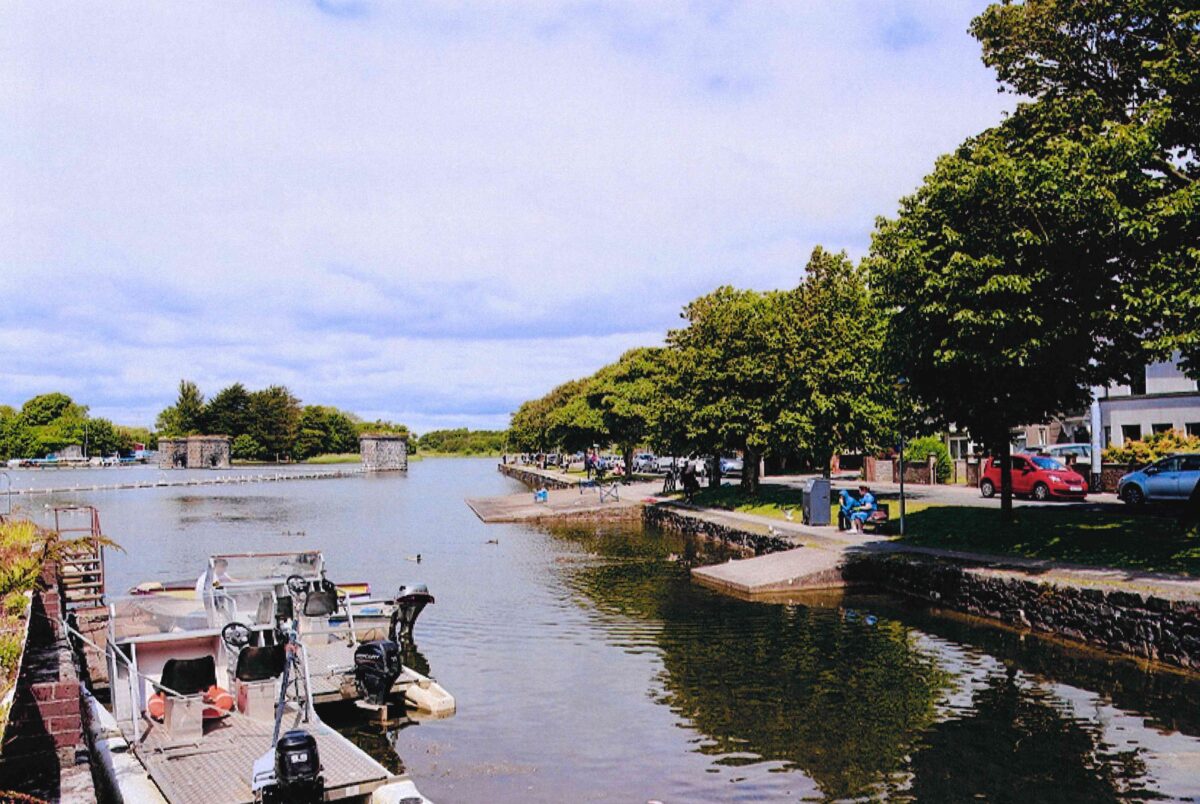
And yet, there is one little corner of Waterside between Galway Rowing Club and Steamer’s Quay that retains a sense of calm and peace which is epitomised by the sounds of the river and the slow movement of the ducks. The Corporation have kindly provided some seats where one can relax and meditate on the beautiful surroundings of that part of the city of Galway.
So, we have two photographs of the area for you today, the first was taken in c1940 and the other a more recent image courtesy of Mick Duffy. On Monday next, the 16th of the month, the revamped park in Woodquay will be formally opened and then, straight after, the distinguished author Trish Forde will formally unveil the latest poem to be included in the Galway Poetry Trail. It was written by a Mercy nun named Sister Finnian, who hails from Inis Meáin. She was for many years a much-loved teacher in the Mercy Convent and has published a number of volumes of poetry, and this poem graces the riverbank almost opposite the Bish Rowing Club.
Bruach Na Coiribe
Ar bhruach na Coiribe
Go ciúin tostach
Suím ar shúistín cloiche
Ag féachaint uaim:
An t-uisce ag sní go rialta
I dtreo na bóchna
Lá in aghaidh lae:
Corr-bhradán ina dtráth
Ag léim go maorga
Ó am go h-am,
Iad sásta go bhfuil a dtriall
Ar áit a saolaithe.
Tógaid scíth faoi scáth and droichid
Tar éis tamaill, leanaid at aghaidh
Go háit a saolaithe —
Sin má bhíonn orthu
Sciorra den ádh.