There are many cultural architects of the Galway that emerged in the 1970s and 1980s. There was a creative energy abroad then, a sense that the old, austere order could be challenged and that a small city on the western edge of Europe could imagine itself differently. That decade conceived the Galway International Arts Festival, the Galway Advertiser, Druid and a growing community of musicians, artists, writers, journalists and performers who all contributed to that transformation.
But if the Arts Festival helped put art on the map, Macnas helped put it in the streets. This month, 40 years after its foundation in Galway in 1986 by Páraic Breathnach, Tom Conroy, Ollie Jennings and Pete Sammon, Macnas deserves to be celebrated not simply as an extraordinary artistic organisation, but as one of the great architects of modern Galway.
Macnas arrived at precisely the right moment. Galway was beginning to discover that it did not have to accept the identity assigned to it. It could be bohemian, unruly, imaginative and ambitious. Where the old city sometimes seemed to exist in black and white, the emerging Galway of the 1970s and 1980s began to dream in technicolour.
Macnas gave that technicolour a physical form. The great achievement was not merely that they made spectacular theatre. It was that they made spectacle belong to everyone. You did not need a ticket, a season subscription or an understanding of contemporary theatre. You simply had to stand on a Galway street and look up.
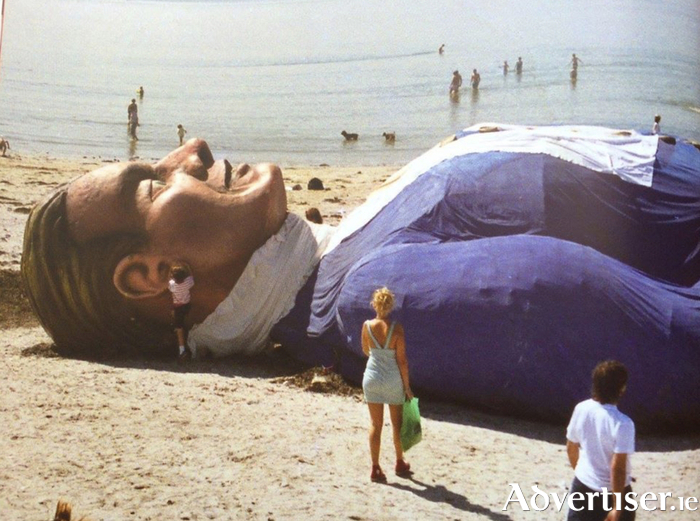
And then came the giants — Colossal puppets, mythical creatures, drummers, fire, masks, strange beasts and armies of performers transformed familiar streets into something altogether different. The city became a stage and its people became part of the performance. Macnas took theatre out of the buildings traditionally associated with culture and brought it into the public realm. Their work was free, communal and unapologetically spectacular.
That mattered. It meant that a child watching a Macnas parade could experience art before they had any idea that they were experiencing art. It meant that people who might never enter a theatre could be caught by imagination in the middle of the street. It meant that hundreds of volunteers could become performers, makers and participants in something much bigger than themselves.
That is cultural architecture.
Macnas emerged from the same extraordinary ecosystem as the Galway International Arts Festival. The Festival, founded in 1978, helped establish Galway as a cultural centre and later served as an incubator for organisations including Macnas, Baboró and the Galway Film Fleadh. The organisations were not isolated achievements; they were parts of a cultural movement that gathered momentum and began to change how Galway saw itself – and how the outside world saw Galway.
Macnas took that movement and made it visceral. There was nothing particularly glamorous about the work behind the spectacle. In workshops, artists and makers were welding, sewing, weaving, hammering, painting and constructing. Ideas that might have seemed impossible were painstakingly turned into enormous physical objects capable of stopping thousands of people in their tracks.
They took the unlikely and made it probable.
They also took Galway out into the world. Macnas became an internationally acclaimed spectacle theatre company, bringing its distinctive mixture of myth, visual art, performance and communal celebration to audiences far beyond the city. Today, its work encompasses parades, theatre, installations, film and performance art, alongside year-round programmes involving young people and communities.
But perhaps Macnas’s greatest export was not a particular production. It was an idea of Galway.
A city where artists could build enormous things. A city where strange was welcome. A city where a parade could be a serious work of art and a serious work of art could still be enormous fun. A city where creativity was not confined to galleries and theatres but could erupt on Shop Street, Eyre Square or wherever the imagination happened to take it.
That identity has consequences beyond the arts. We became a city where difference was welcome and that is why we will never tolerate people telling us who should or should not be our Mayor.
The Galway that emerged from this cultural ferment became attractive not only to artists and arts audiences but to businesses, entrepreneurs, technology companies and med-tech giants. Galway’s cultural reputation became part of its economic proposition: a place where talented people might actually want to live, work and create. The city’s cultural organisations helped create the conditions for that story to flourish.
It would be difficult to put a monetary value on such a contribution. Macnas helped make Galway feel like Galway.
And perhaps that is why its 40th anniversary should be marked with more than nostalgia. It should be an occasion to recognise what happens when a city invests in imagination. The Macnas story is a reminder that culture is not decoration around the economy or an amenity for those who can afford it. It can be infrastructure. It can shape identity. It can alter how a place understands itself and how the world understands it.
For four decades, Macnas has detonated little imagination bombs in the artistic minds of generations of Galway people.
The echoes are everywhere.
We owe them a debt – not merely for the magnificent things they have made, but for the Galway they helped make possible. Happy birthday, Macnas.