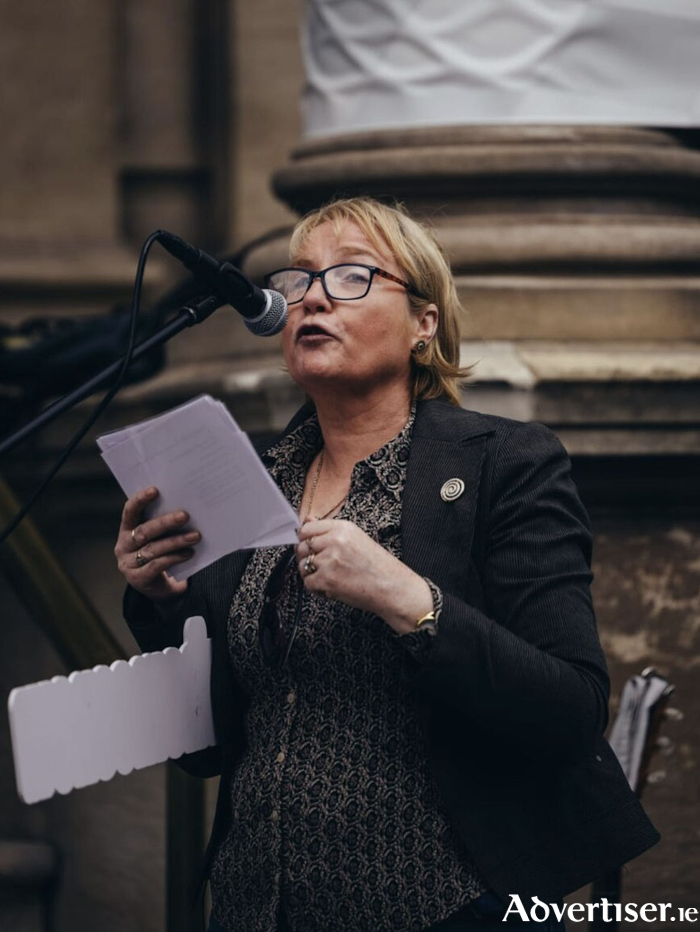
As part of the #TravellerHomesNow campaign, the Galway Traveller Movement (GTM ) has published two reports that are critical analyses examining how the recently adopted Traveller Accommodation Programmes (TAPs ) for Galway City and County Councils are set to perpetuate systemic human rights violations, continuing a cycle of exclusion and inequality for the Traveller community.
Galway Traveller Movement sent the reports to 101 recipients (Galway Councillors and TDs, Relevant Government Departments and Local Authority Staff ). Only 12 responded, demonstrating an alarming lack of political engagement and accountability.
The TAPs are five-year statutory plans that local authorities are required to prepare and adopt under the Housing (Traveller Accommodation ) Act 1998. Their purpose is to assess the need and provide for culturally appropriate accommodation, including halting sites, group housing, and standard housing. However, GTM’s analysis shows that the 2025-2029 plans for Galway do not address the existing Traveller accommodation crisis.
Joint-coordinators of Galway Traveller Movement, Martin Ward and Margaret Ó’Riada said that the Traveller community has been subject to a cycle of inequality living through two decades of unmet goals.
“This is not just a housing crisis; it is a public health emergency and a denial of the community’s cultural rights. Systemic barriers continue to prioritise bureaucracy over the human right to a home and dignity.”
The analysis of the Galway City TAP shows that despite a growing population and worsening homelessness, the plan sets a target of just 12 units of culturally appropriate accommodation (despite an assessed need of 57 ) and 10 units of group housing (despite an assessed need of 22 ). It also fails to count hidden homelessness and sets no clear timelines for addressing conditions on existing sites that violate fundamental human rights.
Meanwhile, for their direct consultation process with the community, Galway County Council’s TAP considered the views of only 48 families—fewer than one in ten Traveller families living in the County. Further, the County TAP leans heavily on standard social housing and makes basic provision to address the growing Traveller homelessness crisis.
The historical denial of cultural rights and identity is evident in the lack of any plan to provide sites for nomadic travel. Each local authority is required to include in their Traveller Accommodation Programme (TAP ) a statement of their “provision for transient sites in its functional area.” Neither TAPs outline a plan for any provision of such sites that would allow travel. Failure to incorporate this is a failure to recognise the nomadic and cultural rights of the Traveller Community.
Nora Corcoran, Accommodation Coordinator and spokesperson for the Galway Traveller Movement said that her community is facing a homelessness crisis which is the culmination of twenty years of missed targets.
“Our current emergency is a direct result of that long-term failure to plan effectively. Homeless services need to ensure that emergency accommodation is culturally appropriate and reflect Traveller culture—a need that has not been addressed in previous TAPs.”
The lack of emergency accommodation in Galway City and County means many families are living in overcrowded homes, cars, or moving between relatives, yet the TAPs do not adequately address homelessness. The City TAP excludes 143 young people who will turn 18 during the plan, and both Councils fail to count the 39% of Travellers who meet the European definition of homelessness (ETHOS ). In their submission to Galway City Council as part of the TAP 2025-2029 consultation process, Galway Simon Community have highlighted that while Irish Travellers make up less than 1% of the population, the community makes up of close to 9% of the homeless population in Ireland.
There are currently close to 5,000 children in emergency accommodation with Traveller children and families alarmingly overrepresented and spending more time than other groups. The length of time spent in emergency accommodation impacts the development of children and affects the family across all social determinants including health, education and employment. Placing children in long-term emergency accommodation breaches the UN Convention on the Rights of the Child (UNDCRC ), denying them the security and stability essential for healthy development.
Nora Corcoran: “For years, we have engaged with the City and County Councils—attending meetings and consulting on plans. Yet, despite this effort, we see little tangible change. Our community needs genuine political will and actors who will treat us with the respect and dignity to deliver culturally appropriate homes that protect our health and our children’s futures.”
GTM’s Traveller Homes Now Campaign is calling on the Minister for Housing, James Browne, and the National Traveller Accommodation Unit to meet with a delegation from the campaign and commit to working towards the realisation of the campaign’s demands.