
Responsible for more than €4.5 billion in trade since it was founded in 2020, Portershed-based, agricultural software company MartEye has helped to propel one of the oldest industries in Ireland into the modern, smartphone era.
What started as a crisis solution in the early days of the pandemic has grown into one of the most important agri-tech innovations in Ireland, and its roots are firmly planted in Galway.
MartEye, developed out of the Portershed innovation hub in Galway city in 2020, has quietly revolutionised the way livestock is bought and sold, not just across Ireland but further afield in the UK as well. Initially set up to support marts during COVID-19 restrictions, the platform has grown rapidly and is now a permanent feature in over 120 marts, with strong uptake in Galway towns such as Tuam, Ballinasloe, and Athenry.
Marts in turmoil
The story of MartEye begins back in the early lockdown days of 2020, when its founders, Ciaran Feeney, Aaron Signorelli, Mark McGann and Jamie Nolan, sought to digitise the world of agri-sales at a time when it was needed most.
For many, it was a time summed up by 2km travel restrictions, dodgy DIY haircuts and a sudden passionate joy for a new hobby or exercise regime. While the rest of the country was cocooned at home, the work of Irish farmers trudged on in the background, business as usual, that is, except for in a few key areas, the most notable of which was livestock trading.
In March 2020, almost overnight, marts across Ireland were ordered to cancel their upcoming sales and shut their doors as the threat of COVID-19 loomed heavily. For weeks, farmers continued to tend to their livestock and their land, all the while not knowing what the future would hold for agri sales in Ireland. Four weeks after the Government issued its closure notice, marts across Ireland were permitted to open their doors once again, but with some key changes, namely social distancing and the number of sellers permitted inside were heavily capped.
In an interview with Agriland on April 24, 2020, the late Jimmy Cooney, who was then the manager of Loughrea Mart, described the buying and selling process in this new COVID time as being 'very time-consuming', saying "In short, the system is a complete and utter disaster.”
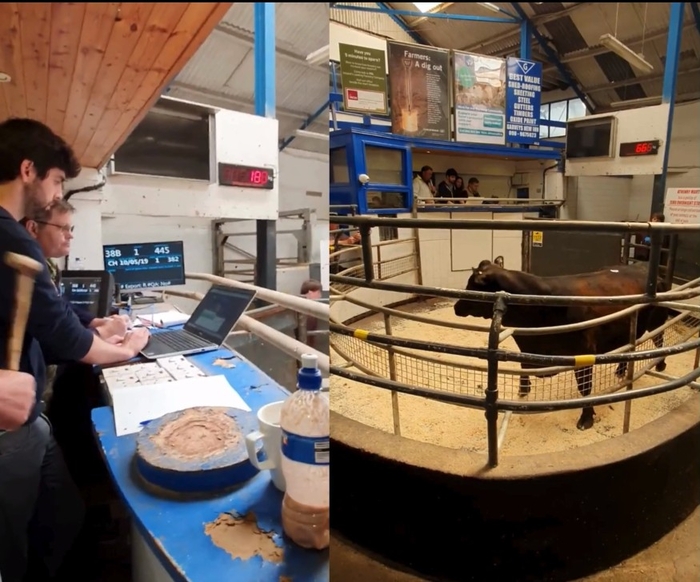
MartEye co-founder Ciaran Feeney pictured here at the company's first live stream from Tullow Mart.
Making the mart accessible
"At the time we (Ciaran, Aaron and Mark were working on a computer vision, ag-tech business looking at herd health (named Herd-Eye ) and when COVID started, Jamie came to us and asked us to look at something to help with bidding in the marts," explained MartEye co-founder, Ciaran Feeney.
Jamie, their partner on the ground, told a mart manager they'd have a live bidding app ready in two weeks. That promise became the deadline. No time for hesitation, no room for error.
"During this time, sales in the mart were like a kind of tender process with a lot of back and forth, and as a result, they were taking hours to complete. So, there was a real need for online bidding at the time, so when the idea came to us, we just jumped in because it was so needed.
"It didn't have to be pretty, it just needed to work."
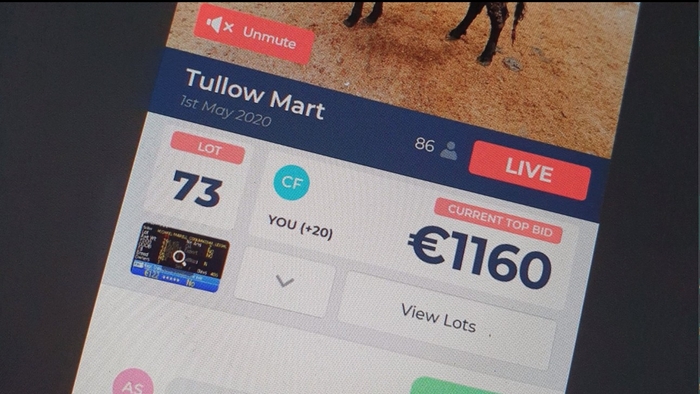
With marts across the country on their knees, farmers spending precious time, money and resources on animals and land while unsure if or when they would be compensated, and pens full of livestock ready to be sold off, MartEye launched into the Irish market to a hero's welcome. The first mart to introduce MartEye's software was Tullow Mart, in Carlow, which went live for the first time on May 1, 2020.
By October that year, more than 40 marts had signed up.
Blood, sweat and tears
When asked if he and his fellow cofounders were surprised at MartEye's success, Ciaran explains that the adoption of technology in Irish marts was always bound to happen, but COVID provided the perfect environment for a company like MartEye to grow.
"It quickly became obvious that it would work, but it was a chicken-and-egg problem to start with. People had tried something similar in 2018 and 2019, but because there weren't enough people bidding online for the market to care about it, and because the market didn't care enough about it, people weren't bidding online.
"COVID forced us to get over that initial hump of reluctance to use tech."
As time went on and COVID restrictions were in flux, the overwhelming adoption of MartEye's technology in marts across the country secured the company's success going forward, winning over initially resistant marts within a matter of months.
Almost overnight, Ciaran, Aaron, Mark and Jamie were facing a near impossible task of installing streaming software in marts across Ireland in one day, leading to sleepless nights, cross-country journeys and persevering through immensely difficult times.
"Initially, it was just us watching everything, and it was just hectic," recalls Ciaran. "You didn't have time to think."
"At the very start, when we were just getting going and we were using software that we didn't build ourselves to keep the marts live, it was a huge amount of pressure. To add to that, there was bad internet.
"I remember making a very conscious decision early on to lean on the marts to make sure that the service is good for the end users. If we could do that, the product would work. If we let that slide, and put the onus back on the user, the quality of the stream would go down, and those tuning into a stream would have a bad experience, and that would be that.
"It was a very conscious decision at the start to put that effort into customer support."
Post-COVID success
Marts have always been more than just a place for trade, they are social lifelines for rural communities. MartEye has managed to preserve that tradition while bringing it into the digital age.
At the heart of the innovation is a digital gavel, the first of its kind, hand-carved from Irish ash and fitted with electronics that sync the live ring with the online auction. For auctioneers, there’s a custom dashboard, and for buyers, a simple app that’s free to use. Marts pay a fixed monthly fee to access the system, which has handled over €150 million in livestock sales to date.
Farmers can now tune in to live sales through their phones or laptops, place bids in real time, and even watch the trade late into the night from the kitchen table.
"In the first couple of years after we launched, we would regularly get stories in from people about their father being sick and in the hospital and using MartEye to check in with the local mart. A couple of weeks ago, someone let us know that a nursing home was streaming an auction from the local mart for its residents.
"There is a connection to the community that those of us in the office might not see daily, but MartEye has helped to build a kind of digital community in Ireland," said Ciaran.
That down-to-earth approach has worked wonders. Within five years, MartEye has gone from strength to strength, with the company's scope expanding from livestock to additionally cover the sale of land and machinery across Ireland and the UK.
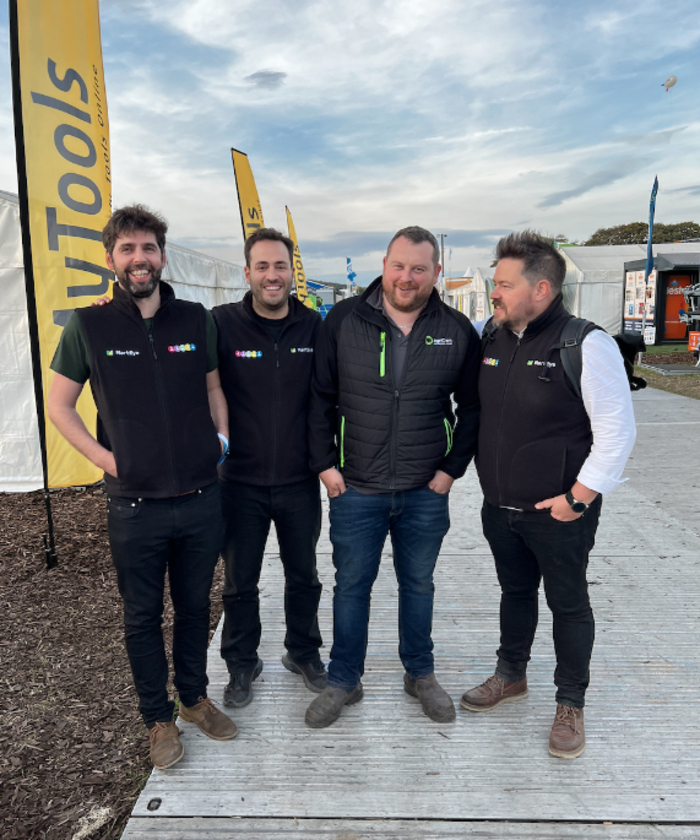
MartEye founders; Ciaran Feeney, Aaron Signorelli, Jamie Nolan and Mark McGann.
Giving back
With the Irish mart being a key part of rural communities, MartEye's strong tradition of charity partnerships has been an almost inherent factor within the company's structure. Over the years, MartEye has raised thousands for deserving local and national charities, starting strong with a MartAid charity auction in aid of Embrace FARM in November 2020, just six months after the company's launch.
"Working with charities is something we are actively trying to pursue and develop in future, we are trying to donate or facilitate fundraising in whatever way we can."
In addition to working with local charities, Ciaran, the only one of the four cofounders to still live in Galway, has participated in mentorship programmes aimed at helping the founders of future start-ups to develop and mature their ideas.
What is next for MartEye?
With half a decade of success and growth under its belt, MartEye has embarked on another significant project that will once again transform the industry, changing the invoicing and back office element of trading forever.
"Over the past two years, MartEye Live has been the online portion of sales, but there is a whole back office piece which covers invoicing, customer management, reporting to Government bodies and audits. So that process has been tested and rolled out to some of our customers in the UK and tested on livestock markets in the UK and some in Ireland are already using it."
Describing the development as being currently in the 'beta product' stage, Ciaran says the next step now for the project is to tie trade invoicing into the online sales process, creating an overall 'better' and more seamless product for the buyer and seller.
With continuous growth and development being a key part of MartEye, the company has garnered much attention over the years, both from media outlets and awarding bodies alike. MartEye has been chosen by the Local Enterprise Office Galway to represent the LEO and the county are the upcoming National Enterprise Awards 2025, which will take place at the Mansion House in Dublin on May 22.
Five years since it answered the call of Irish farmers and marts, MartEye has helped a vital institution to sustain a way of life during uncertain times, and now, it is shaping its future.
From a Galway city co-working space to the heart of rural Ireland, MartEye is proof that with the right tech, the mart’s spirit doesn’t have to change, just the tools we use to keep it going.
