Last week, the state-owned Land Development Agency was given the green light to apply for planning permission for 356 apartments in four tower blocks on over six acres of lands stretching from the entrance to Lough Atalia, to the Commercial Docks.
In January, tidal gauges at the docks recorded the largest ever storm surge due to Storm Éowyn, which battered the area during an ebbing tide. New modelling from the University of Galway predicts the possibility of massive flooding of the area if a storm of similar strength makes landfall at high tide.
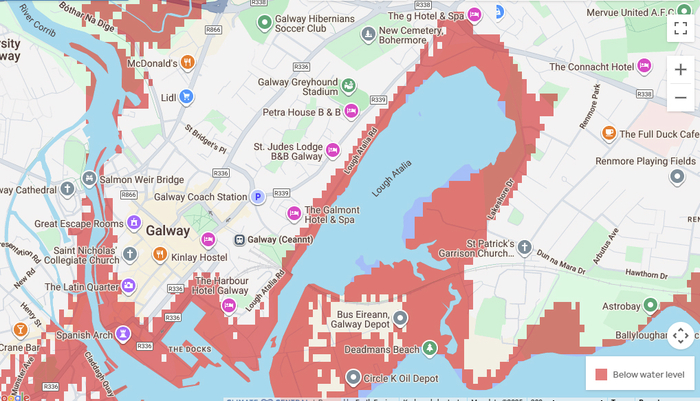
Speaking in a private capacity, Derrick Hambleton, former chairman of An Taisce Galway, said he was worried that Galway city’s flood prevention measures are still only at a preliminary design stage, according to publicly available information from the Office of Public Works (OPW ).
“I would be concerned about the implications for a number of current planning applications in the city that are perhaps vulnerable to any future storms, especially where flood prevention measures are unlikely to be in place inside the next ten years,” he said.
The OPW commissioned JBA Consultants to draw up a report on flood prevention measures in 2015, but to date no infrastructure has been designed for Galway city’s coastal areas.
The OPW says it has committed €100m per year expenditure on national flood prevention up to 2030. For comparison, the Scottish government spent €56m last year on just one coastal flood prevention scheme in the town of Millport including a 400m breakwater using 140,000 tons of rock armour.
Last year, the Environmental Protection Agency warned that urban areas of Galway were highly exposed to increased storm surges and coastal erosion due to sea level rises.
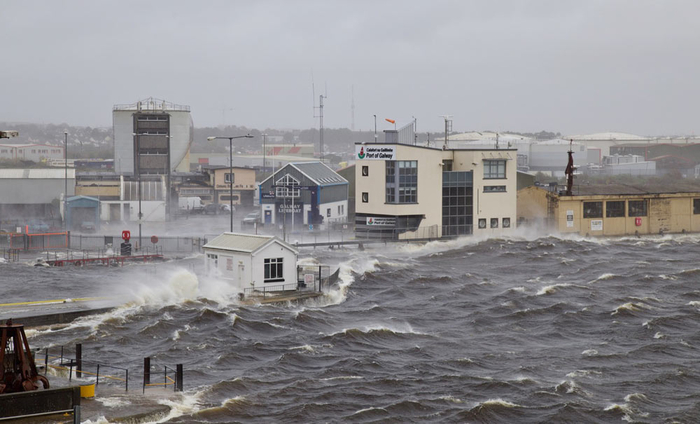
Planning officials in Galway City Council say they have not yet received a formal planning application from the LDA for its dockland project, expected to include buildings higher than five storeys.
"Where a development, including residential development, is proposed in identified flood risk areas in Galway City, the type or nature of the development needs to be carefully considered, and the potential risks mitigated and managed through on-site location, layout, and design of the development to reduce flood risk to an acceptable level," planners said in a statement.
Recommendations from the Strategic Flood Risk Assessment (SFRA ) elements of the city's development plan may be applicable, alongside technical flood management recommendations published as ministerial guidelines in 2009.
A spokesperson for the LDA did not respond to enquiries.